
The site your ad money lands on.
Most law firm websites describe the firm. Founding year, awards, a photo of the courthouse. The person reading it got rear-ended on Tuesday and wants to know two things: do I have a case, and will anyone pick up. We build the site that answers those two questions in the first screen and takes one tap to reach a human.

Intake pages, not brochures
Every case type you want to sign gets its own page, its own copy, and its own form. A car accident page that talks about car accidents beats a home page that talks about the firm, every time.
Speed to lead, plumbed in
Tap to call on mobile, forms routed to the person who runs intake rather than a shared inbox, and an after-hours handoff so a late-night form fill gets a call back the same night.
Where paid traffic lands
The site is the last step of every channel you pay for. A slow page or vague copy does not just lose that one visitor, it raises the price of every campaign pointed at it. One fix moves search, paid, and social at the same time.
Load speed is a spec
Page weight, image sizes, and script count get set before design starts, then tested on a phone on cell service instead of office wifi. Every extra second of load is budget spent on people who already hit back.
Drag it and see the difference.
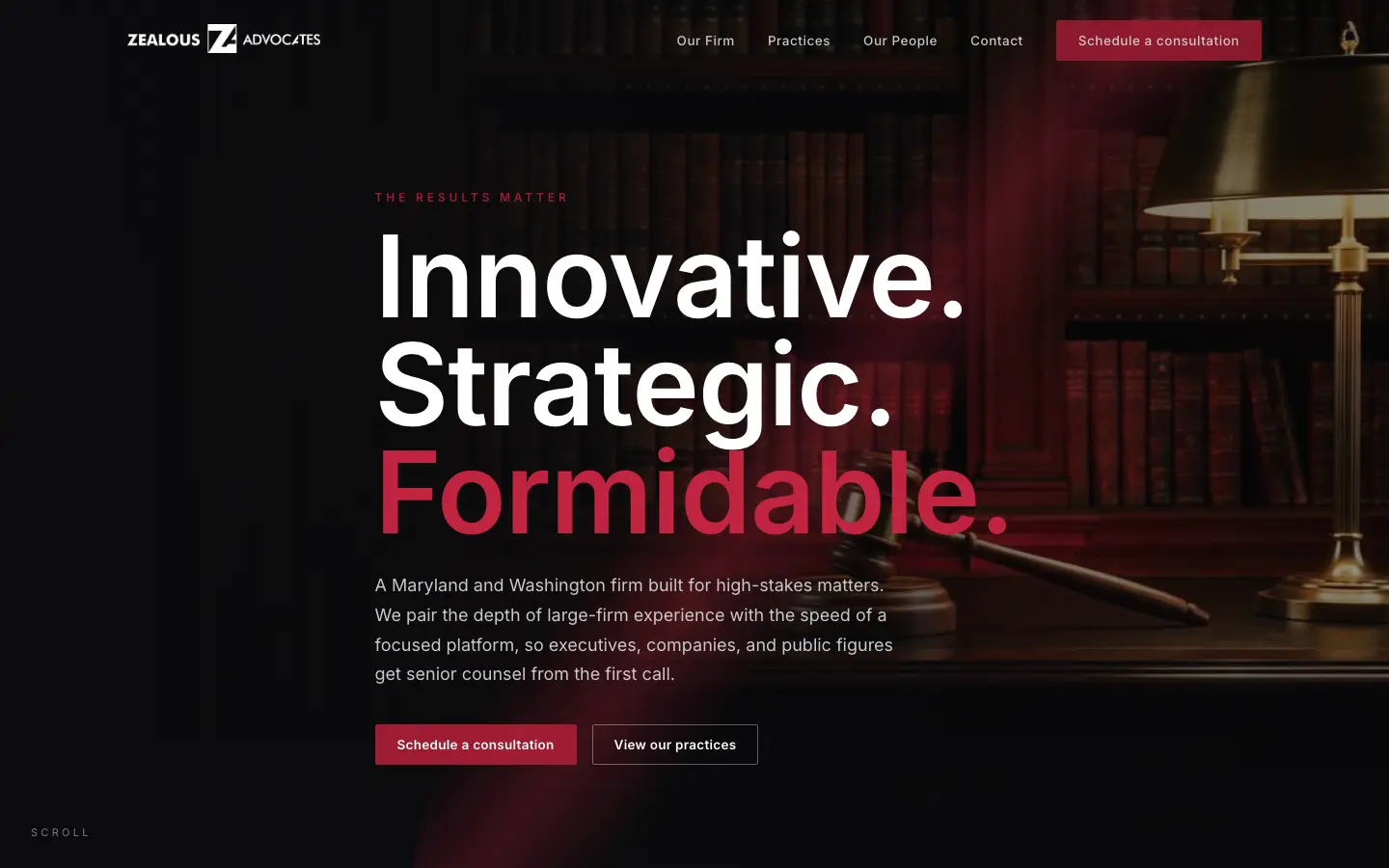
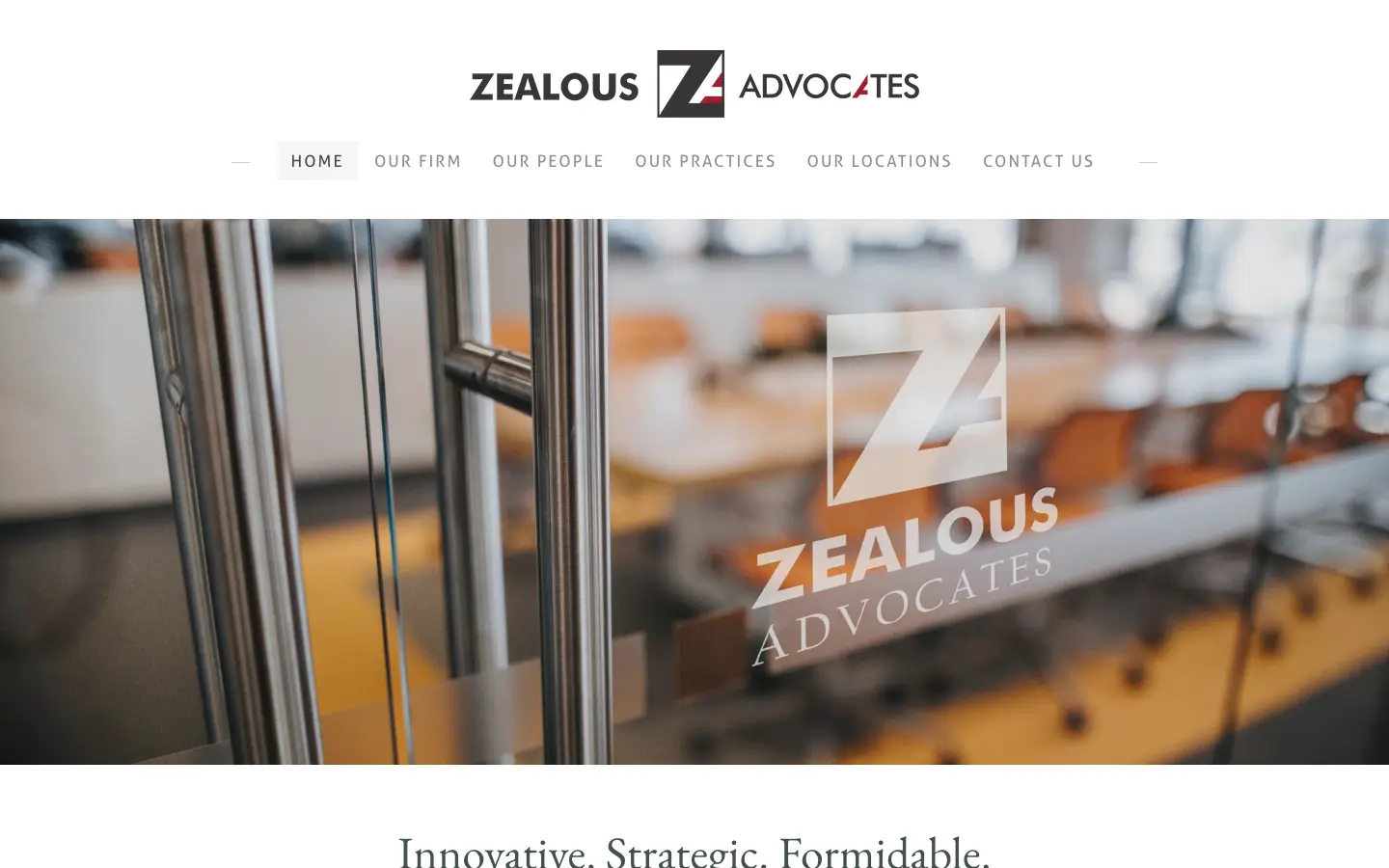
A litigation firm in Maryland and Washington, rebuilt on their own logo, their own colors, and their own headline. Nothing here was invented. The words on the right are the words already on their site. The only thing that changed is whether a visitor can find them, read them, and act on them.
The headline got to work
Innovative, Strategic, Formidable was already their line. On the original it sits below the fold under a stock photo. Now it is the first thing on the screen.
One obvious next step
The original offers six navigation items and no action. The rebuild puts Schedule a consultation in the nav and again in the hero, so contacting the firm is never something you go hunting for.
It says who it is for
Executives, companies, and public figures, named in the first paragraph. A visitor knows within one screen whether this firm handles what they have.
Concept redesign produced by High Arc Media. Shown as design work, not as a client engagement. All marks belong to the firm.
Brochure site versus intake site.
Seven patterns we find on nearly every firm site, and what each one gets replaced with. Read the left column and count how many describe yours.
Headline is the firm name and the year it was founded.
Headline names the case type and the question the visitor actually typed.
One contact form for everything, landing in a shared inbox.
A form per case type, routed to whoever runs intake, by text and email.
Phone number sitting as text inside a header image.
Tap to call, at thumb height, on every screen of the page.
All practice areas stacked on one page of dense paragraphs.
One page per case type, matched to the ad and the search that feed it.
Every ad, listing, and profile link points at the home page.
Each campaign lands on the page written for the case it buys.
Nine fonts and a slider load before the phone number renders.
Page weight set before design starts, checked on cell service.
Awards and bar admissions taking the whole first screen.
Proof first, credentials further down where they still do work.
Two of those rows are about where campaigns land. Buying the clicks is a separate job, covered on lawyer advertising, and earning them is covered on law firm SEO. This page is only about what the click hits.
What it costs.
One-time project
Landing page
One practice area, one offer, built to take ad traffic.
- Single practice-area intake page
- Copy written for the case type
- Click to call and intake form routing
- Analytics and conversion tracking
Firm site
A full rebuild. Home, practice areas, attorney bios, contact.
- Up to ten pages
- Attorney bio pages
- Practice-area pages with their own intake
- Schema, speed, and mobile handled
- Content moved over from your current site, up to ten pages
Custom build
Multi-office or multi-attorney firms with real complexity.
- Unlimited practice-area and bio pages
- Multi-office and multi-location structure
- Custom intake logic and integrations
- Content migration handled

Every channel lands here.
Good to know.
How much does law firm web design cost?
High Arc Media prices law firm web design as a one-time project. A single practice-area landing page is $1,800. A full firm site of up to ten pages, with attorney bios and practice-area pages that each carry their own intake, is $4,500. A custom build for multi-office or multi-attorney firms, with custom intake logic and content migration handled, is $9,000. There is no ongoing design retainer.
What makes a law firm website convert?
Three things. The page matches what the visitor searched or clicked, contacting the firm takes one tap, and someone answers. Most attorney website design work stops at the first one and calls it done. A car accident page that opens with the firm's founding year loses to a page that opens with whether the visitor has a case and a phone number that dials when tapped.
Do I need a whole new website or just landing pages?
If your firm site loads fast and reads clearly, you likely need landing pages, one for each case type you are paying to acquire. If it is slow, hard to update, or written entirely about the firm, rebuilding costs less than overpaying on every channel while you patch around it.
How does my website affect what my ads cost?
Every paid click lands on the site, so the site sets the conversion rate for Google Search, Local Services Ads, Meta, and organic search all at once. A page that converts at half the rate doubles the cost per signed case on all of them. Nothing else in a law firm marketing budget moves that many channels with one change.
How fast does a law firm website need to load?
Fast enough that the headline and the call button are on screen before the visitor gives up and returns to the search results. We test on a phone on cell service, because that is where the click comes from. Speed is not a vanity score on this kind of site. Every dollar you spend on search, on directories, and on social ends up on these pages, so a slow build raises the price of all of it at once.
Where should my campaigns send traffic?
To the page built for the case that campaign is buying, not the home page. A DUI campaign lands on a DUI page, with DUI copy and a DUI form. Same rule for organic search and for the link on a directory profile. Sending everything to the home page hands the sorting job to the visitor, and most visitors will not do it.
Will rebuilding my website hurt my Google rankings?
Not if the migration is handled. Existing URLs get redirected one to one, the pages that already rank keep their content and titles, and schema gets rebuilt rather than dropped. Rankings often move for a couple of weeks after a launch and settle. The firms that lose traffic are the ones who move to a new platform and let the old URLs return 404s.